Executive Summary of the White Paper – Fiscal Impacts of the New York Health Act on Counties, Municipalities, and School Districts:
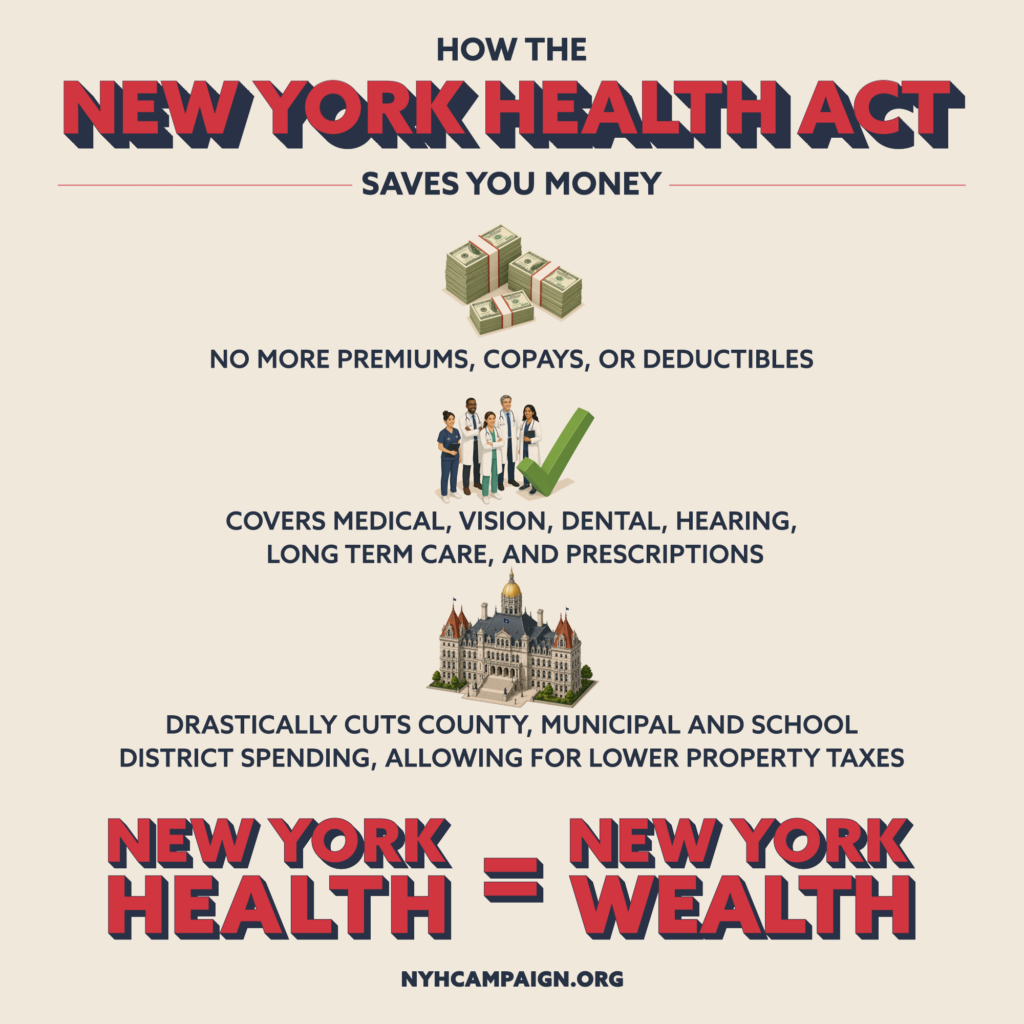
The New York Health Act (NYHA) would establish a universal health system covering all New Yorkers, financed by a progressive tax. By eliminating private insurer profits and marketing costs, improving administrative efficiency, and leveraging stronger bargaining power to negotiate prices, the NYHA could significantly reduce overall health care spending in the state.
Public debate about single-payer health care often focuses on who pays for health care—the shift from premiums and out-of-pocket costs to progressive taxes—and the direct effect on household health spending. For most New Yorkers, this shift would mean paying less overall for health care than under the current private insurance-driven system.
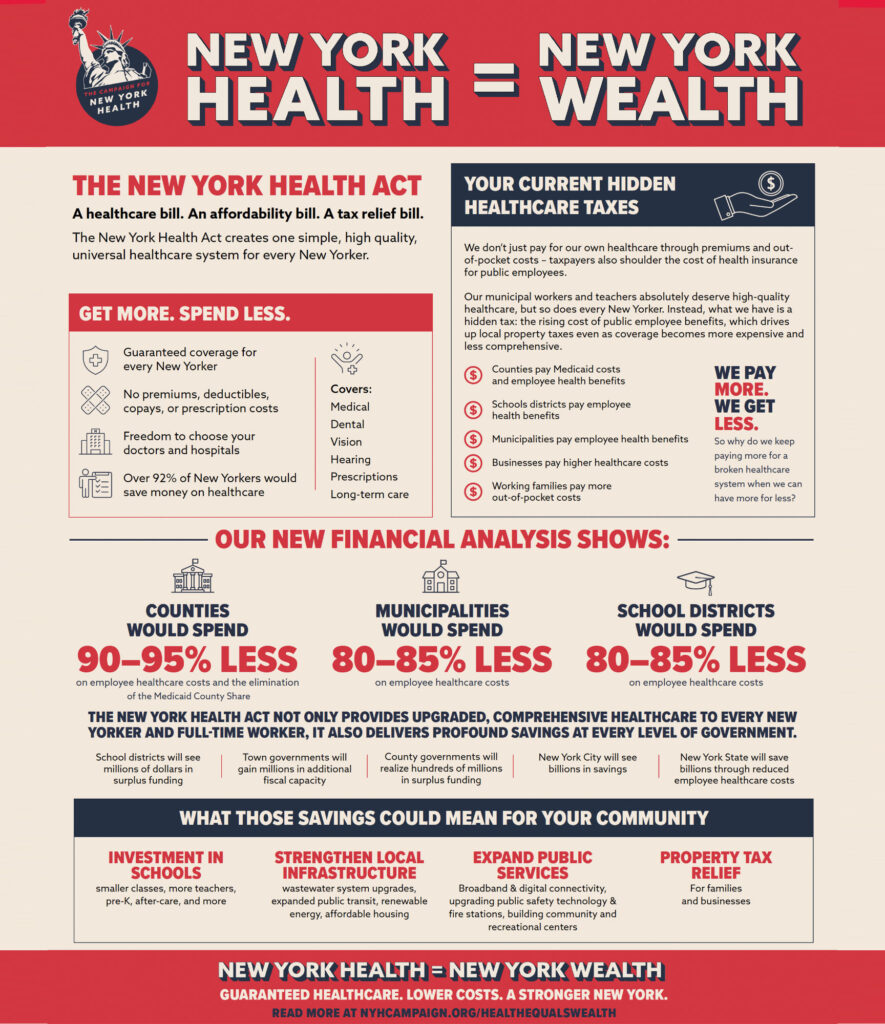
There is an important and often overlooked opportunity, however, to reduce costs at the county, municipal, and school district level. Under the current system, local governments devote a substantial share of their budgets to employee health benefits and, in New York’s case, the county share of Medicaid financing. These expenditures, which are major drivers of local budget growth and property tax pressure, would be replaced in local budgets with a progressive payroll tax.
This white paper analyzes the fiscal impact of the NYHA on local governments and school districts, focusing on potential savings resulting from swapping the current system of employer-sponsored health insurance costs plus the Medicaid county share for the NYHA system, using Suffolk County and one municipality and one school district in the county as an example. The results are replicated across 13 counties, 17 municipalities, and 22 school districts across all 10 economic regions of the state.
The analysis suggests that by replacing health insurance-related costs with the progressive payroll tax, local governments could save on average of between 12 and 14% of their total budgets.
Eliminating health insurance costs for local governments and school districts could translate into improvements in schools, infrastructure, and public services and/or lower property taxes for households and businesses, with potential ripple effects such as lower rents, lower consumer prices, and stronger local economic activity. At a time when working families, businesses, and local governments are facing increasing economic pressures, the New York Health Act presents an opportunity to simultaneously expand access to health care and provide measurable fiscal relief for taxpayers.
Read the full document, download here.